Social Science of Consumers
Social Science of Consumers
Continue reading Social Science of Consumers

Social Science of Consumers
Continue reading Social Science of Consumers
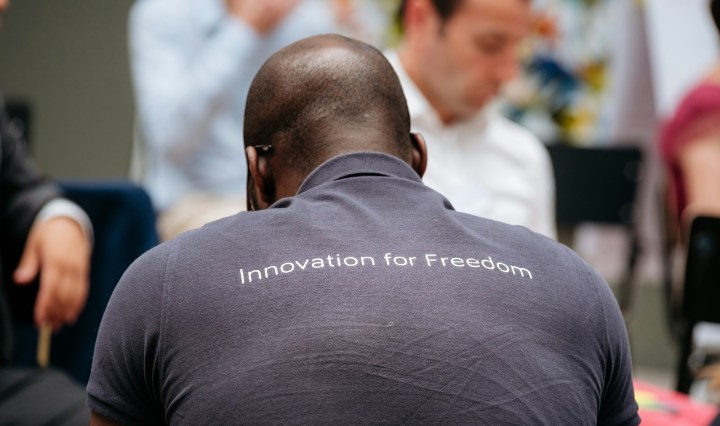
Social scientists are trained to think critically. This doesn’t mean in the colloquial sense. This is about learning a suite of scientific methodologies for framing questions, collecting and analysing evidence and making recommendations.
Continue reading “Innovation Through Social Science”
I’m one of the moderators for Science on Google+. I curate the social science stream. Our community is co-hosting a discussion on autism research live on air, in around an hour’s time (2pm Australian time or 10pm USA EST or 3am UTC/GMT). Our co-host partner is Autism Brainstorm, a research-led community of practice that puts families in touch with experts and resources of support.

Social science offers sophisticated methods for governments to better understand social media. The London School of Economics & Political Science argues that social scientists are using their research techniques to improve meaningful collection of social data.
Continue reading “How Can Social Science Help Governments Manage Social Media?”
We’re constantly told to act according to common sense. Common sense is supposed to stop us from making foolish mistakes, and in many ways it does. This notion describes all of our social learning in a nutshell. It’s the collection of the sum total of our personal experiences as well as those of the people around us. It helps us walk into a situation with a certain level of familiarity. The problem with common sense is that it can be misleading.
Continue reading “Social Science of Common Sense”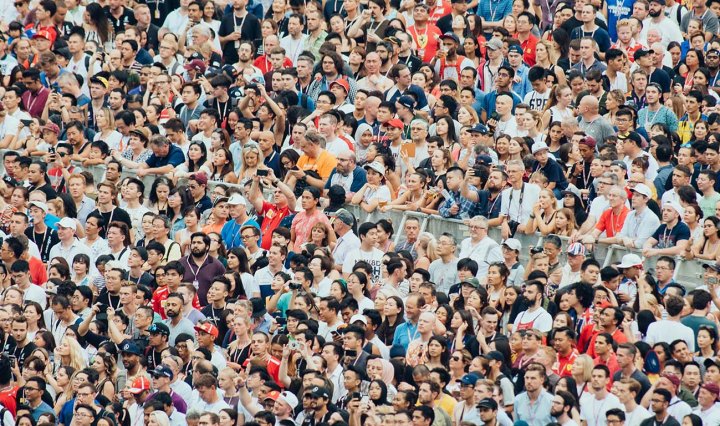
Social policy makers need ongoing research into the social behaviour of crowds. This is partly about urban planning, such as management of landscapes, improving infrastructure, decreasing traffic congestion and so on. Governments also need to understand crowd behaviour because local communities need to improve social service delivery.
Continue reading “Social Science of Crowds”
On Sociology at Work, a not-for-profit that I run, Scott Burrows writes about his work addressing youth unemployment in picturesque Illawara, in regional New South Wales, Australia. Scott works a sociologist and research consultant for private industry.
Continue reading “Research Consultancy to Improve Civic Participation”
Social psychologist Efrat Tseëlon is interested in feminist readings of fashion and culture. Tseëlon argues that while the English dictionary might define the practice of wearing masks and disguise as an attempt to conceal and misrepresent, masquerade is something different. Masquerade is not about portraying something false, but rather it is a way to understand the intricacies of identity. Masquerade draws its meaning through historical context, as the way in which we present our ideal selves in public changes over time.
Continue reading “Social Science of Masquerade”
At Scientific American’s request, the chief scientist at bitly (www.bitly.com) [Hilary Mason], which shortens URLs for Web users, examined 600 science Web page addresses sent to the company’s servers on August 23 and 24. Then she tracked 6,000 pages people visited next and mapped the connections (below). The results revealed which subjects were strongly and weakly associated. Chemistry was linked to almost no other science. Biology was linked to almost all of them. Health was tied more to business than to food. But why did fashion connect strongly to physics? And why was astronomy linked to genetics? Check out the … Continue reading Link Analysis of Science on Bitly
 Social Science Insights