
Race and Dating
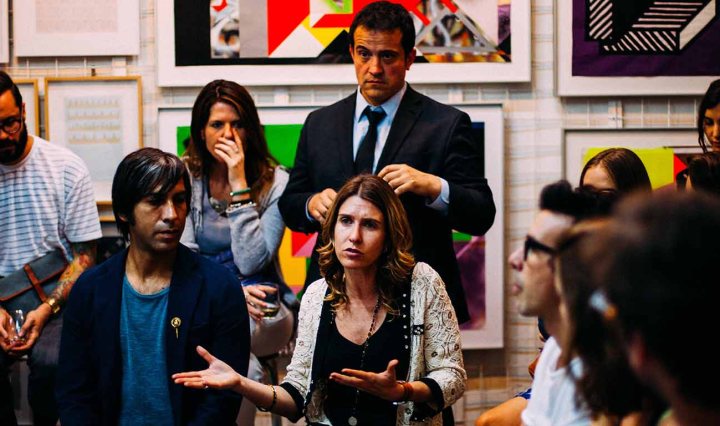
Last week I was part of a panel on Race and Dating, at 107 Projects in Sydney.
Continue reading “Race and Dating”
Last week I was part of a panel on Race and Dating, at 107 Projects in Sydney.
Continue reading “Race and Dating”
Much like the challenges facing educators looking to transform education in a way that is more meaningful to Indigenous students, Australian sociology has many issues of colonialism to address.
Continue reading “Decolonising Sociology”
Postgraduate students discuss how social science can improve the future
Continue reading “Social Science Aiding the Future”
I was featured on the University College London Researchers about my time running my consultancy. Read more below about my career transition and how I use social science when working with not-for-profit organisations and businesses.
Continue reading “Turning Social Science Into a Business”
“Over the last decade an average of 27 million people have lost their homes to disaster each year, and in 2010 that number rose to 42 million. In an especially bad year of violent conflict, 2013 saw three times more … Continue reading 27 Million People Homeless Due to Disaster

This is the first in a series of posts exploring how social science supports local governments in the provision of health policies and services. Continue reading “Healthy Communities: Local Government Supporting Public Health”
French researcher Jacqueline Fendt argues that academic research on businesses is not practical enough in its focus. She argues that management education would be improved with a stronger focus on the everyday realities of Executives.
She also advocates using more qualitative research methods and case studies, rather than statistical surveys. This would improve in-depth understanding of how management is actually carried out in the real world. So how do social scientists carry out this type of work? One method we use is called ethnography.
Continue reading “How Social Science Can Improve Executive Relationships”
A study of 1,700 Americans finds that entrepreneurs pray twice as much as the general public: more than half pray at least once daily, and one third pray multiple times per day. Entrepreneurs are also more likely to say they feel a personal connection to God “who is interested in their problems and affairs.”
The study finds that entrepreneurs also tend to attend religious services in churches that encourage business and profit-making, which some of the larger organised religions do not. Entrepreneurs are celebrated as risk takers and extroverts. Religious people are typically painted as conservative and risk-adverse. How do these findings reconcile these two phenomena?
Continue reading “Entrepreneurship and Religion”
An EU study lead by anthropologists finds that contrary to popular ideas that social media is weakening or transforming social bonds, Facebook in particular is reinforcing offline connections.
Continue reading “Facebook Conserves Offline Relationships”
Social scientists use ethnography to study individuals and groups interacting in their everyday lives. This involves attending public events, observing community behaviour and gathering other information to assess how people react to social situations.
Continue reading “Social Science for Clients” Social Science Insights