

Social psychologist Efrat Tseëlon is interested in feminist readings of fashion and culture. Tseëlon argues that while the English dictionary might define the practice of wearing masks and disguise as an attempt to conceal and misrepresent, masquerade is something different. Masquerade is not about portraying something false, but rather it is a way to understand the intricacies of identity. Masquerade draws its meaning through historical context, as the way in which we present our ideal selves in public changes over time.
Tseëlon writes:
…disguise is meant to hide, conceal, pass as something one is not. Masquerade however is a statement about the wearer. It is pleasurable excessive, sometime[s] subversive. The mask is partial covering; disguise is full covering; masquerade is deliberate covering. The mask hints; disguise erases from view; masquerade overstates. The mask is an accessory; disguise is a portrait; masquerade is a caricature. But these distinctions are tenuous, as each also shares the attributes of the other, at least in some uses or historical contexts… Thus, whatever shade of meaning of masquerade one chooses to employ it is obvious that through a dialectic of concealing and revealing masquerade serves a critical function. It calls attention to such fundamental issues as the nature of identity the truth of identity, the stability of identity categories and the relationship between the supposed identity and its outward manifestations (or essence and appearance).
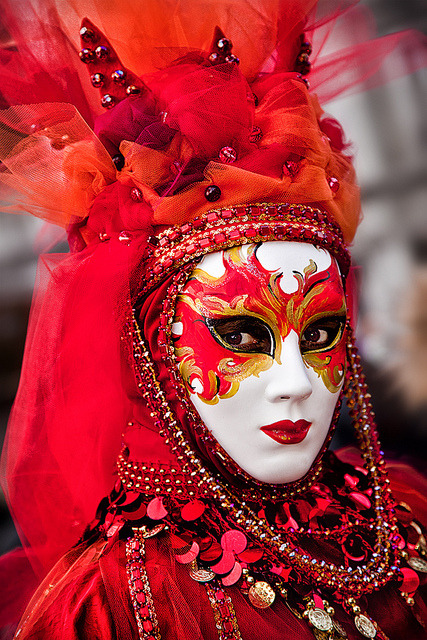
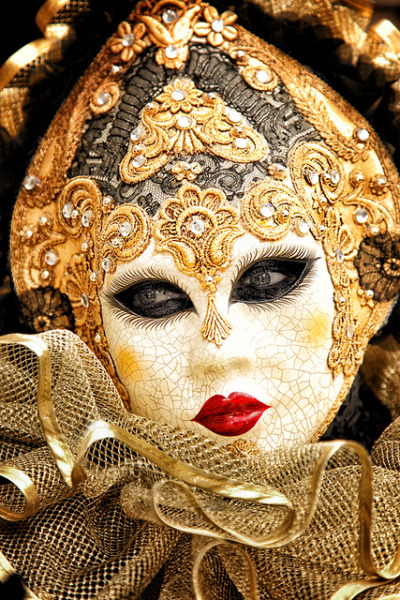
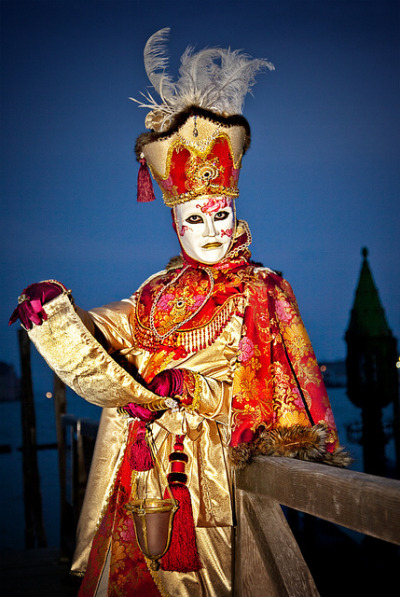
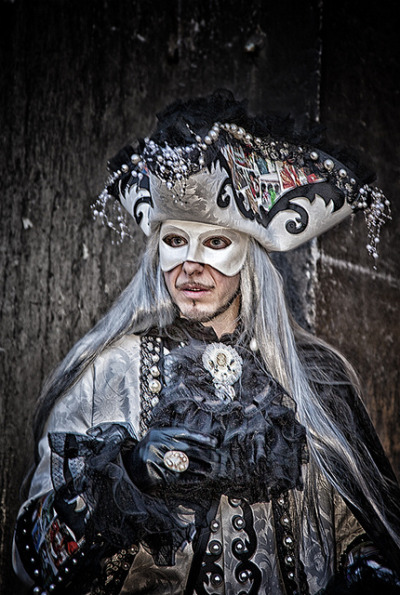
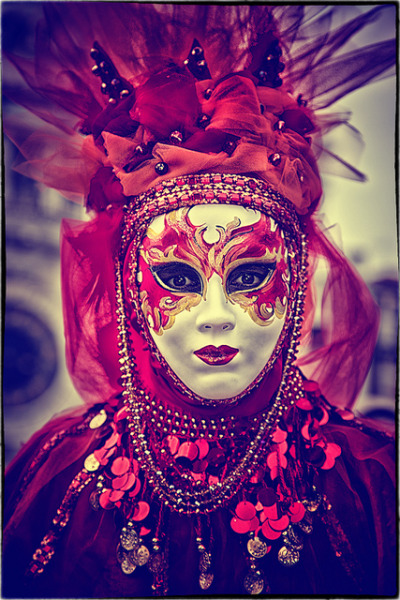
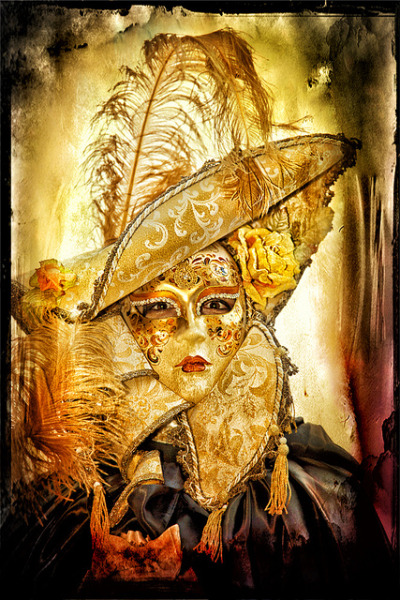
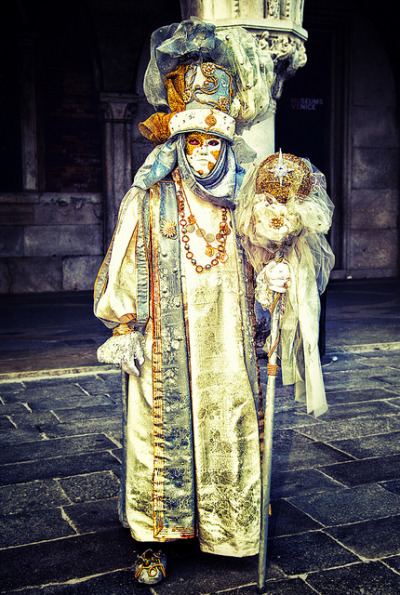
Tseëlon outlines how the cultural practice of wearing masquerade is ancient. In Western culture, masquerade can be found in the philosophical writing of Plato, who wrote about life as a puppet show. Masquerade appears in Shakespeare’s plays, where comedic situations involving masquerade allow individuals to adopt new identities and experience other genders. It is also famously personified in the annual Carnival of Venice, held in Italy. Masquerade has been used throughout Western history as a way to play around with ideas of what makes up our “true” self. Masquerade has been employed by women in particular, liberating them from restrictive gender and sexual scripts, if only for brief periods at a time.
The study of masquerade allows us to ask: is there such a thing as an “authentic” self? Do we easily transgress social norms behind the anonymity of costume, or do we mostly adhere to the rules set out for us? Who are we when we don’t have to live up to the preconceived ideas of how other people see us?
Credits
Gallery photography: Venice 2012… by JoesSistah on Flickr.
 Social Science Insights