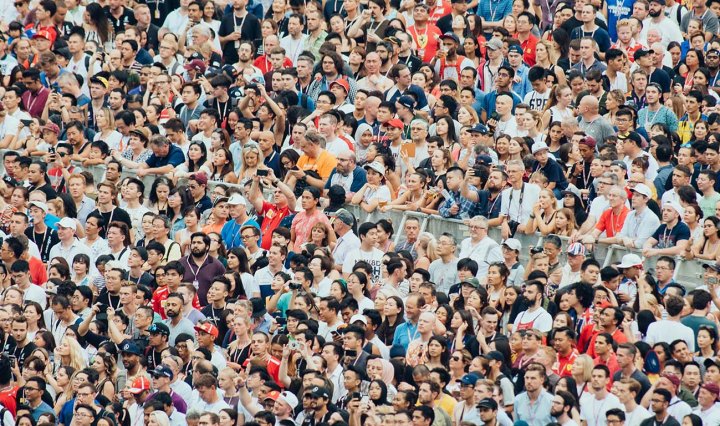
A packed crowd in a stadium

Social Science of Crowds

Social policy makers need ongoing research into the social behaviour of crowds. This is partly about urban planning, such as management of landscapes, improving infrastructure, decreasing traffic congestion and so on. Governments also need to understand crowd behaviour because local communities need to improve social service delivery.

Continue reading “Social Science of Crowds”

Critique of ‘The Happiness Industry’

Australian social psychologist Hugh Mackay‘s new book The Good Life critiques the “outbreak” of positivity as a consumer industry. I share with you Mackay’s interview with Radio National as an example of public social science. 

Continue reading “Critique of ‘The Happiness Industry’”
A white man frowns as a white woman is talking to him and pointing to a book

Making the Most of Communication Styles Within Business

Today’s post provides an overview of the key personality types that are used in management training and in team building exercises. I will then talk about some of the limitations of applying personality types too strictly within organisations. I’ll discuss how managers and leaders can adopt a more flexible model of personality types to improve how their team members communicate with one another, which in turn will boost their team contributions at work.

Continue reading “Making the Most of Communication Styles Within Business”
A groups of masks, with a red and golden jester's mask in the centre

Social Science of Masquerade

Social psychologist Efrat Tseëlon is interested in feminist readings of fashion and culture. Tseëlon argues that while the English dictionary might define the practice of wearing masks and disguise as an attempt to conceal and misrepresent, masquerade is something different. Masquerade is not about portraying something false, but rather it is a way to understand the intricacies of identity. Masquerade draws its meaning through historical context, as the way in which we present our ideal selves in public changes over time.

Continue reading “Social Science of Masquerade”