“Mental Health is a Separate but Unequal System”

Child psychologist, Tim Murphy, tells USA Today:

“The federal government has set so many barriers to getting care, which they have done with no other type of illness, and it is wrong. There is no other area of medicine where the government is the source of the stigma.”
Continue reading ““Mental Health is a Separate but Unequal System””
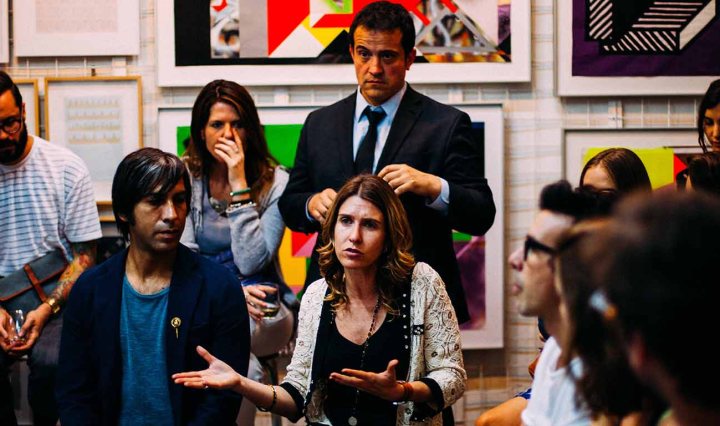
A room full of majority white people are listening to a woman speak about something seemingly serious

How Social Science Can Improve Executive Relationships

French researcher Jacqueline Fendt argues that academic research on businesses is not practical enough in its focus. She argues that management education would be improved with a stronger focus on the everyday realities of Executives.

She also advocates using more qualitative research methods and case studies, rather than statistical surveys. This would improve in-depth understanding of how management is actually carried out in the real world. So how do social scientists carry out this type of work? One method we use is called ethnography.

Continue reading “How Social Science Can Improve Executive Relationships”
People watching a concert

Social Science Quote: The Conquest of Leisure and Health

Toda’s social science quote comes from Bertrand Russell, mathematician and philospher, from On Education, Especially In Early Childhood. Below is the quote in context of arguments for, and against, practical education.

A blue lake with trees in the background. Quote overlaid: What will be the good of the conquest of leisure and health, if no one remembers how to use them? - Bertrand Russell, philosopher
– Bertrand Russell, philosopher.
Continue reading “Social Science Quote: The Conquest of Leisure and Health”

Improving Health and Life Expectancy

How does social science help improve life expectancy? By examining health risks amongst vulnerable populations and addressing inequalities that impact wellbeing.

Continue reading “Improving Health and Life Expectancy”

Social Science for Clients

Social scientists use ethnography to study individuals and groups interacting in their everyday lives. This involves attending public events, observing community behaviour and gathering other information to assess how people react to social situations.

Continue reading “Social Science for Clients”

Ageing Positively: How Technology Can Help

Western societies have dramatically changed the way we see ageing. Getting older once meant prestige: a special status and social influence within a community. This has declined in modern times, as societies became increasingly obsessed with youth. As advanced societies face an increasingly older age structure, we have started to look for social policy solutions to improve “positive ageing.”

Continue reading “Ageing Positively: How Technology Can Help”
Bright circles background with word tiles on the top, which spell: Autism

Autism Research Discussion

I’m one of the moderators for Science on Google+. I curate the social science stream. Our community is co-hosting a discussion on autism research live on air, in around an hour’s time (2pm Australian time or 10pm USA EST or 3am UTC/GMT). Our co-host partner is Autism Brainstorm, a research-led community of practice that puts families in touch with experts and resources of support.

Continue reading “Autism Research Discussion”

Measuring Well-Being: Why Health, Gender and Communities Need to be Counted in Surveys

The OECD’s Better Life Index attempts to compare well-being amongst OECD nations using education, housing, environment measures. The Economist has reproduced this graphic, which ranks Australia first, the USA second and Norway third.

On the one hand these types of surveys are useful because they measure social conditions rather than simply material wealth. On the other hand, this particular graphic neglects other socio-economic measures that give a different picture of national well-being.

Continue reading “Measuring Well-Being: Why Health, Gender and Communities Need to be Counted in Surveys”