

If you have a hybrid or remote team, or you run a lot of online meetings, you might be looking for new ways to engage your colleagues. Perhaps you’re seeking fun activities to break up long workshops. Here are suggestions of ice breaker games, polls and quizzes that go down a treat in small meetings and large workshops. These games are inspired by social science, by promoting cultural awareness, prompting safe discussion, and supporting diverse communication styles. Use these game templates for free.

Ice Breakers
Ice breakers can sometimes be daunting, as they often rely on sharing personal information. Other times it can feel monotonous, as people are asked to respond to the same question. Guessing games can invite a sense of collegial bonding without the forced disclosure of personal details.
For one of my projects, our small team started each meeting with a five-minute game. We did this because the project was about developing an online training game. We also wanted to remain creative and keep reminding ourselves to have fun. Our team was fully online at the time, across New South Wales and Victoria. The games had to be easy to set up and run.
Here are a few of the games we played.
City Guesser
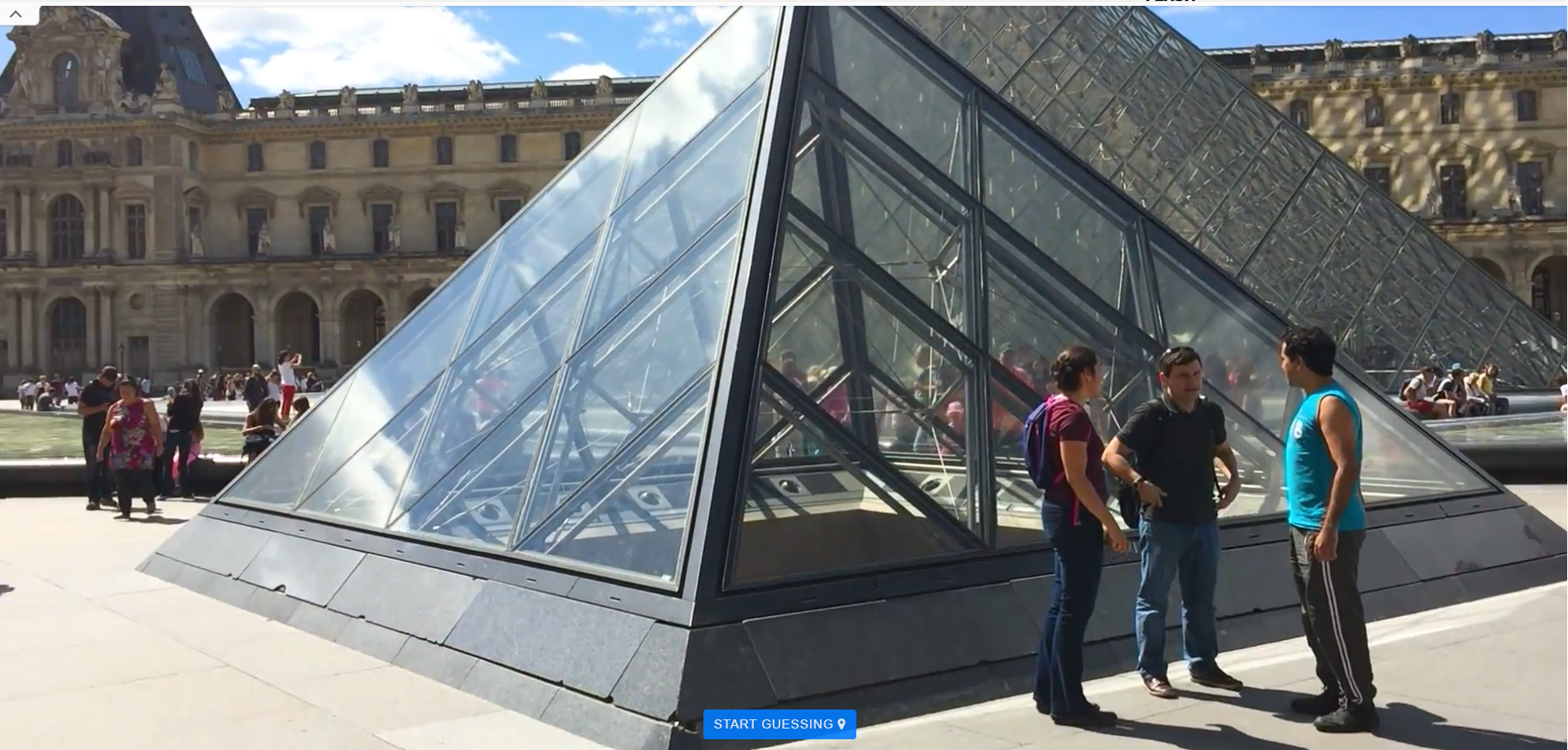
City Guesser is a free website that will show you a video from the point of view of a person walking around in a random city or towards a monument anywhere in the world.
- The team calls out guesses of where the city / monument is
- The moderator asks the group to reach consensus
- The moderator types the team’s answer onscreen
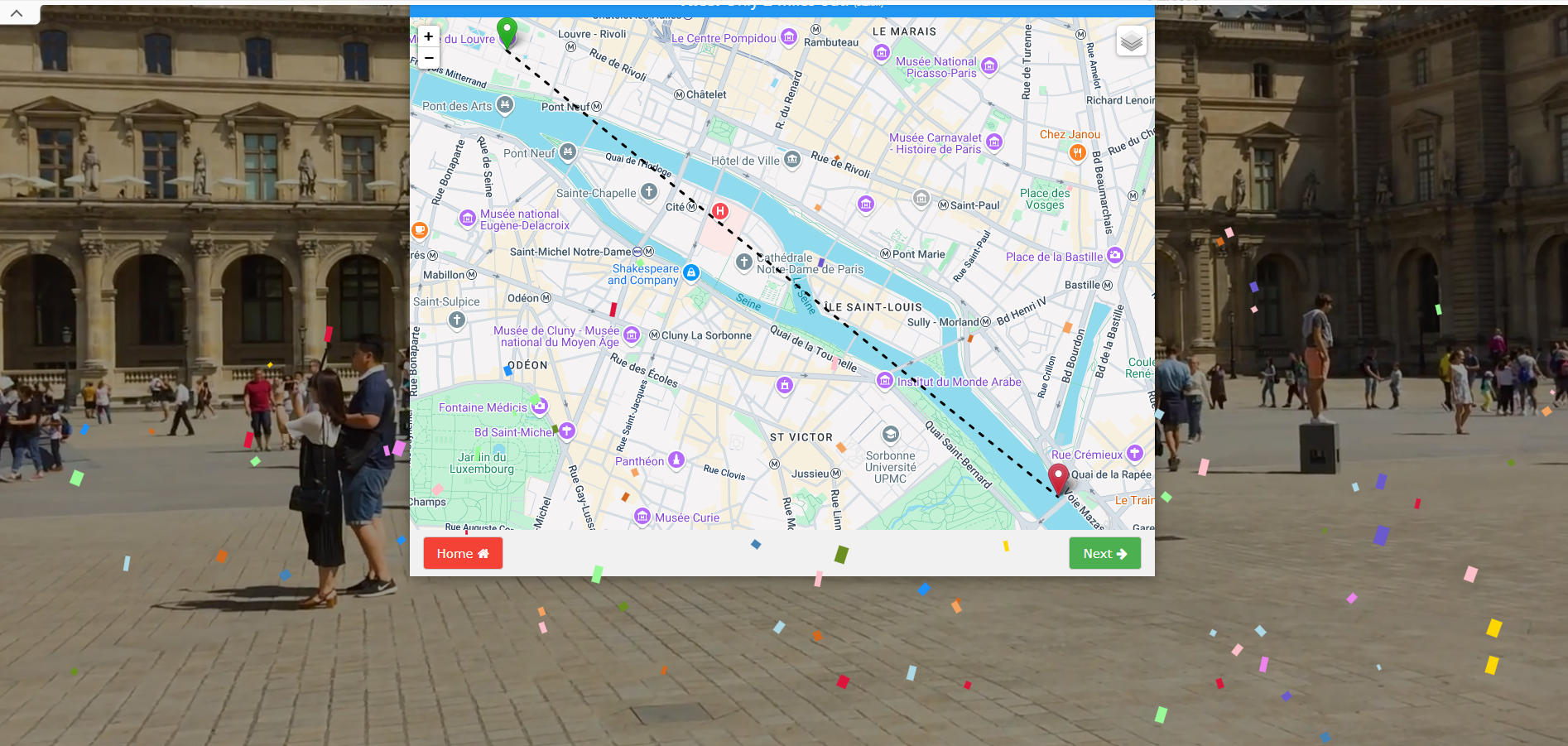
- You instantly see how far away you were from the correct place.
If you get it right, the screen erupts in confetti and the audio plays cheering. Below is an easy one. Most of the other locations are intriguing and delightfully challenging.
This game promotes cultural awareness. It can also be a fun way to prompt people to share whatever is most comfortable for them. E.g.
- Has anyone been here?
- Have you heard of this statue before?
Explain a film plot badly
Other icebreakers can help a team work collaboratively, by solving a puzzle relating to film, music, or popular culture. People will organically share their knowledge as they help their team mates, which builds a little camaraderie.
A good game that never fails to get teams laughing is Explain a Film Plot Badly.
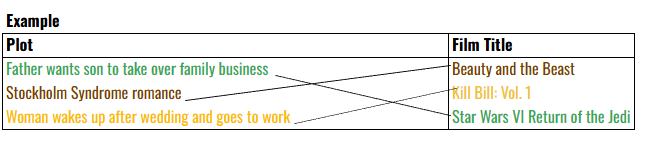
- Each team gets a list of film titles alongside a list of badly explained—but accurate—plot explanations
- Teams have five minutes to match the baldly explained plots to their correct title
- At the end, each team reports back on their list.
- Each team gets a point for each correct answer. The winner is whichever team gets the most points.
Teams play simultaneously online, such as via Microsoft Teams or Zoom. Each team gets a different list on their own tab on the spreadsheet I’ve created (see below).
It’s a hoot to hear each team explain their answers.
In the three examples below you see the plots matched to the correct films.
Poll
Polls are an especially engaging way to kick off a workshop. They can help to introduce safe discussion of broader themes.
I’ve used Mentimeter regularly, though there are many other similar software options you might use.
- The moderator shares their screen, which provides a code for everyone to access the poll
- The moderator shows a broad question that relates to the meeting aims
- The moderator lets everyone know that their answers will appear on screen, but they remain anonymous to you and everybody else
- Participants type their response using their laptop or phone
- The moderator discusses some of the common responses or notable trends. Ideally, let everyone know which ideas will be covered during the meeting, and whether some themes need to be parked for later
- Give everyone an opportunity to share any further reflections
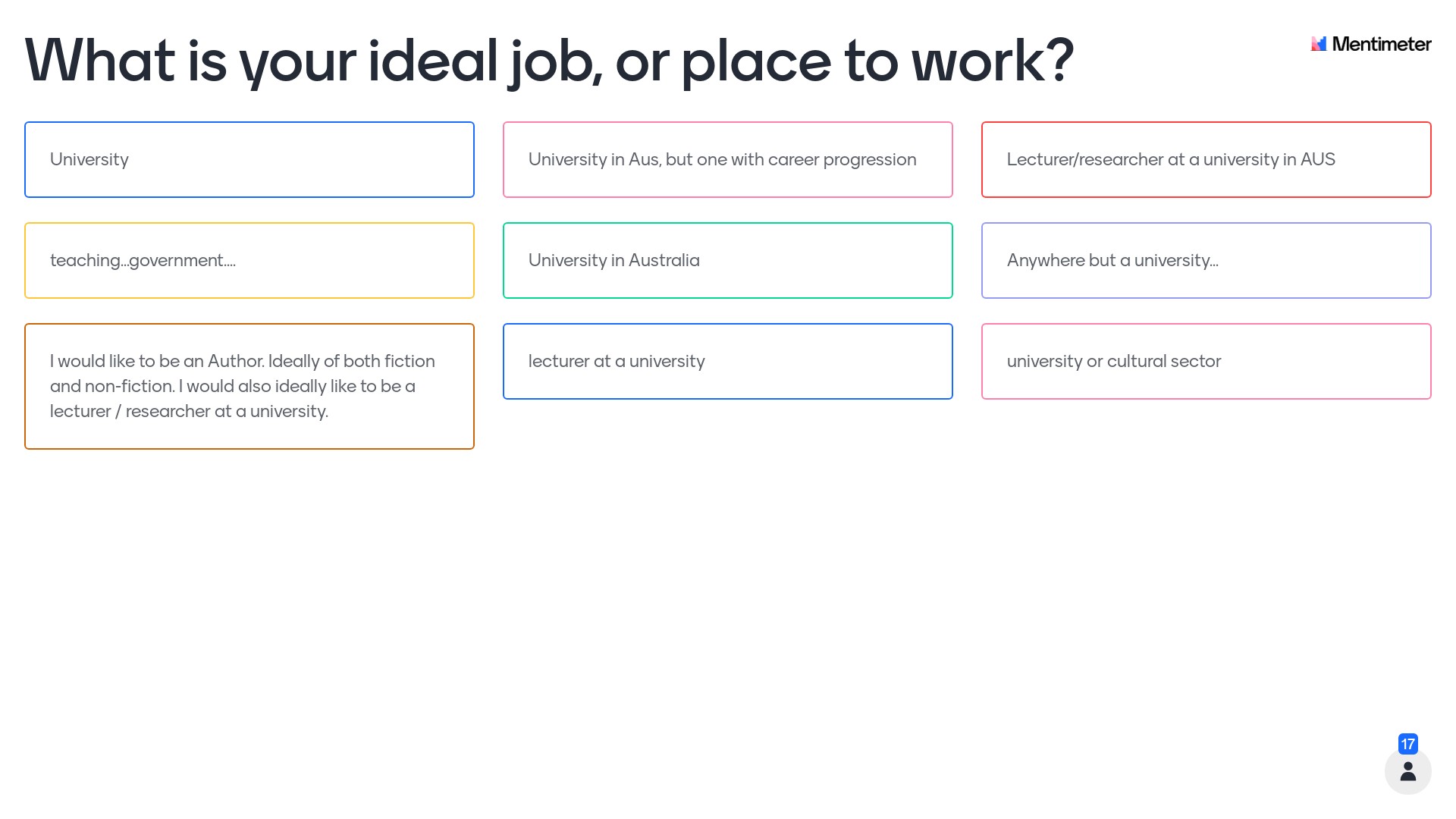
Below is an example from a careers workshop I ran. I asked participants to tell me their ideal place to work. I then I tied back their answers to my discussion throughout the session.
Quiz
Quizzes are a useful way to establish a fun and creative tone for a meeting. They can also support participation of introverted people whose decision-making is stimulated by solo thinking.
Google Forms or Microsoft Forms offer easy ways to create quizzes for free (the first requires a Google account, the latter a Microsoft subscription). You can add images to make the questions livelier.
I often use Kahoot to get a group laughing, as it incorporates audio and animations, like GIFs, and you can adjust the timing of questions, from five seconds to four minutes. The free version is fine if you have a small group, as it limits the number of players, but it still allows you to mix multiple choice questions and true/ false responses. The paid version has greater variety.
If you’re looking for a corporate-appropriate quiz, feel free to download my quiz about New South Wales (shown below). I used the questions with a group of 50 staff, and it worked like a charm. Here’s a taste:
- How many Premiers has New South Wales had?
- What’s the oldest human-built structure in Sydney?
- Which animal is NOT native to New South Wales?
- True or false? 2,000 people cycle across the Sydney Harbour Bridge every day?
- Which of these NSW sites does NOT have any known Aboriginal rock art?
Happy team-building!
 Social Science Insights