
Social Science Quote: One must care about a world one will not see
Our social science quote of the week is by Bertrand Russell, philosopher and mathematician. Continue reading Social Science Quote: One must care about a world one will not see

Our social science quote of the week is by Bertrand Russell, philosopher and mathematician. Continue reading Social Science Quote: One must care about a world one will not see

Social science studies find that male bosses are more likely to judge the competence of women managers using a skewed view on gender. In practice, this means organisations are missing out on a proactive approach to leadership.
Continue reading “Why Women’s Leadership is a Business Asset”
Australia’s in the midst of the festive season, the spirit of which is about giving and positive change ahead of a new year. So what does our not-for-profit sector look like?
Continue reading “The Benefits of Volunteering for the Business Sector”
I’m one of the moderators for Science on Google+. I curate the social science stream. Our community is co-hosting a discussion on autism research live on air, in around an hour’s time (2pm Australian time or 10pm USA EST or 3am UTC/GMT). Our co-host partner is Autism Brainstorm, a research-led community of practice that puts families in touch with experts and resources of support.
This short video provides a useful reflection on the ongoing racial problems in South Africa. Al Jazeera interviews a newlywed couple who say that while different racial groups are now used to interacting with Others in public (at work for … Continue reading Interracial marriage in South Africa

A forthcoming international survey of 240,000 workers by Barbara Annis shows that women feel professional exclusion in their workplaces, while men remain unaware that there’s a problem. Men resort to expressing old fashioned chivalry like opening doors and offering to pay for lunch, thinking this makes women feel more comfortable and appreciated. In fact, it is the way that men exclude women from promotional opportunities, meetings, and mentorship that is a problem for women.
Continue reading “How to Promote Gender Equality in Your Workplace”
The OECD’s Better Life Index attempts to compare well-being amongst OECD nations using education, housing, environment measures. The Economist has reproduced this graphic, which ranks Australia first, the USA second and Norway third.
On the one hand these types of surveys are useful because they measure social conditions rather than simply material wealth. On the other hand, this particular graphic neglects other socio-economic measures that give a different picture of national well-being.
Continue reading “Measuring Well-Being: Why Health, Gender and Communities Need to be Counted in Surveys”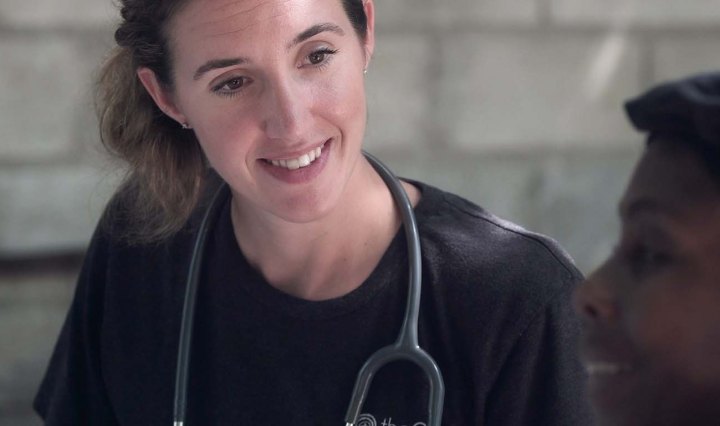
I’m going to start doing shorter blog posts along with my usual longer analyses. These quick posts will be part of my Social Science Snack series, which will show how research can improve business, the community sector and social media. My aim is to write about social science research in a way that makes the academic language and ideas more widely accessible. I also focus on providing solutions to specific organisational problems.
Today’s Social Science Snack is about how community health services might empower patients.
Continue reading “How to Empower Patients”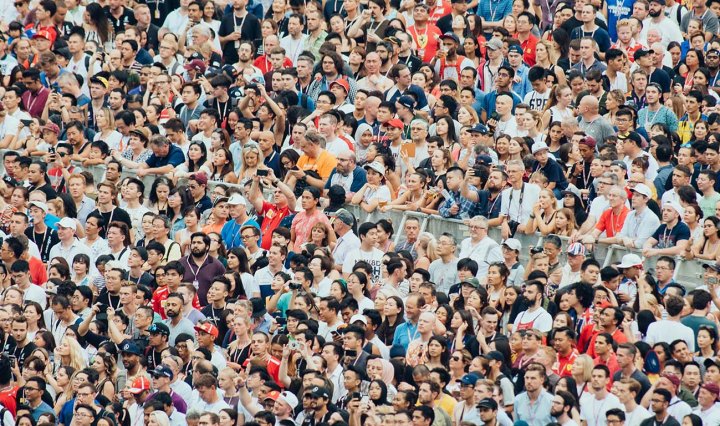
Social policy makers need ongoing research into the social behaviour of crowds. This is partly about urban planning, such as management of landscapes, improving infrastructure, decreasing traffic congestion and so on. Governments also need to understand crowd behaviour because local communities need to improve social service delivery.
Continue reading “Social Science of Crowds”
Sociology defines culture as something we do (social practices). It involves using things such as dress and food to communicate our social belonging to particular groups, as well as using other physical resources (materials).
Continue reading “Sociology of Culture” Social Science Insights